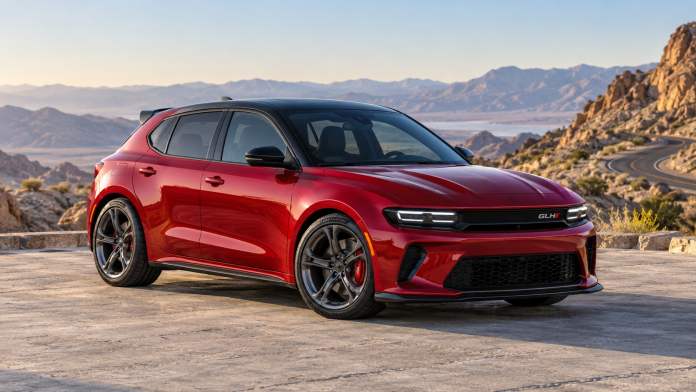
Dodge is reaching into the drawer of old performance badges again, and this time it has found one that deserves another shot: GLH. Goes Like Hell. Three letters that once turned an unassuming little Dodge Omni into something considerably more entertaining than its economy-car upbringing suggested. For those of us who remember when a practical hatchback could also be a troublemaker, that is encouraging news. Provided, of course, the accounting department remembers what made the thing appealing.
According to Car and Driver’s reporting, Dodge showed a proposed GLH at Stellantis’ May investor event and described it as a “muscle hatch.” The publication places it somewhere between a tall hatchback and a small crossover, effectively succeeding the Hornet. Even the final naming remains unsettled: Hornet could return, with GLH identifying the performance version. Whatever ends up on the hatch, the interesting part is the possibility of a smaller Dodge built around driving enjoyment.
There is a useful distinction here. Give a crossover some black wheels, red stitching and a threatening television commercial, and you have a marketing package. Build something with responsive steering, properly sorted suspension, serious brakes and enough power to make an ordinary drive entertaining, and you might have a hot hatch. Dodge has an opportunity to earn that description, regardless of which category the brochure puts it in.
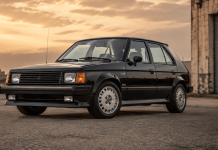
The original Omni GLH understood the assignment. It took an inexpensive, practical hatchback and gave buyers a reason to care about what happened between the driveway and the parking lot. Turbocharging raised the stakes, and the later Shelby GLH-S pushed output to 175 horsepower—enough to give that humble little box a reputation far beyond its appearance. As we explored in our Omni GLH-S feature, embarrassing more prestigious machinery was a large part of its charm.
For the revival, MotorTrend expects a turbocharged 2.0-liter four-cylinder producing around 300 horsepower, with a more powerful SRT version following. Its forecast points to a 2027 arrival for the 2028 model year. Those remain projections rather than a final production specification sheet, so nobody should be ordering personalized plates based on an assumed horsepower number just yet.
Around 300 horsepower sounds promising to me. The more interesting questions concern weight, size and how willingly the thing changes direction. A compact performance car should feel eager. You should be able to enjoy it on a winding road without needing three lanes, a launch-control countdown and advance permission from your insurance company. Acceleration matters, but so does having fun below the speed at which your license becomes a souvenir.
I would also put a manual transmission on the wish list. That is a request, not an announced feature. Give buyers a good driving position, sensible controls and seats that hold them comfortably, too. Spend the development money on the parts that make the car better to drive. I can survive without another dashboard animation congratulating me for selecting Sport mode.
Then comes the price, which may be the most important specification of all. Early reporting described the GLH as part of Stellantis’ push toward more affordable vehicles, with an intended starting point below $39,000. That is an early target, not a window sticker, and the eventual equipment and trim structure will matter enormously.
An accessible starting price only helps if the version you actually want remains accessible. The suspension, brakes and useful performance equipment should not require climbing through several increasingly expensive packages. Let the SRT serve the buyers who want more, but make the regular performance model worth owning. A GLH should leave enough money in the budget for tires, gasoline and somewhere interesting to drive.
I am willing to give Dodge some latitude on the shape. A slightly taller hatchback could still deliver the practicality and personality that made the original appealing. But the finished vehicle needs to justify those three letters from behind the wheel. Build something useful, lively and attainable, and Dodge could have a car enthusiasts genuinely want to talk about—and buy. Goes Like Hell is a great promise. Costs Like Hell would rather spoil the reunion.